Cookline equipment
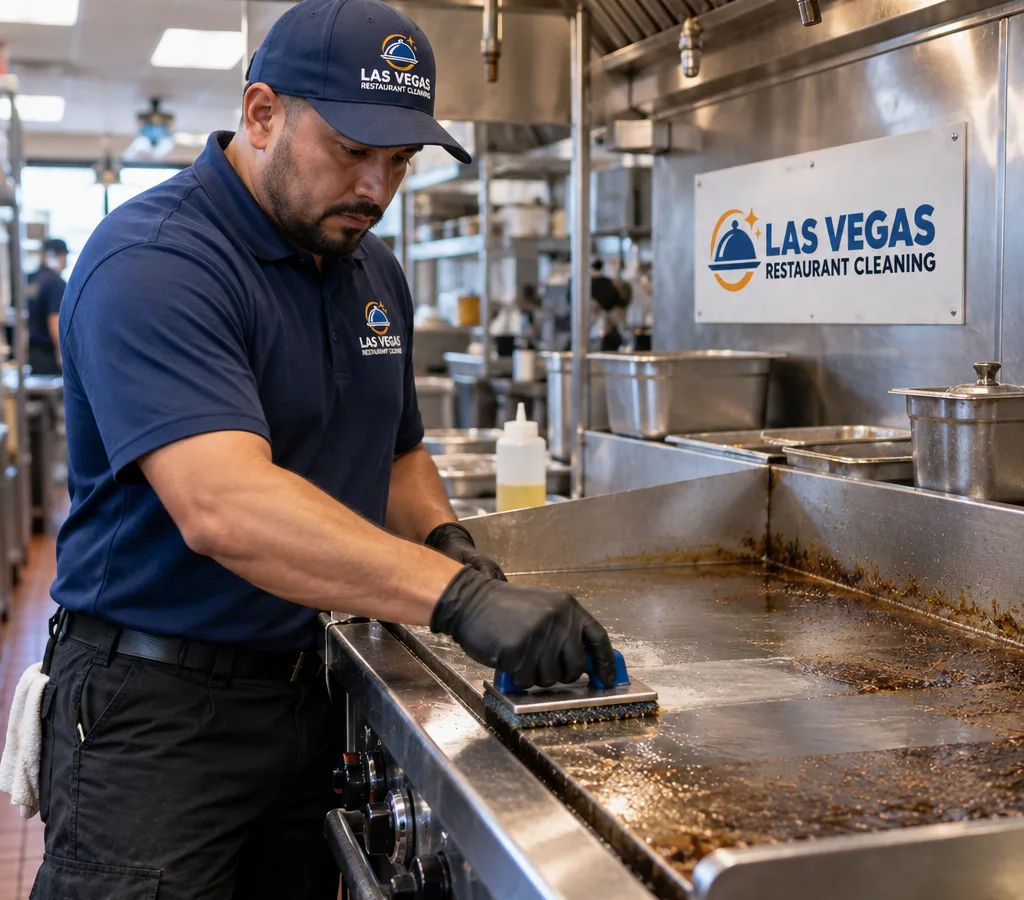
Flat tops, charbroilers, range tops, ovens, salamanders, and surrounding stainless. We focus on baked-on grease and carbon that impacts heat transfer and causes smoke.
Serving Las Vegas, Nevada & surrounding areas
Mon–Fri 8am–6pm · Sat 9am–2pm
Restaurant equipment cleaning in Spring Valley
Degrease, detail, and sanitize the equipment your kitchen depends on, with scheduling that works around prep, service, and inspections.
Restaurant equipment takes the hardest wear in the building. Oils polymerize on hot surfaces, flour dust gets pulled into fans, and splash zones build up residue that can turn into odors, smoke, and pest pressure if it is ignored. Our Restaurant Equipment Cleaning Spring Valley service focuses on the items that affect food safety, ventilation, and day-to-day performance.
Las Vegas Restaurant Cleaning serves Spring Valley from our Las Vegas location at 1807 W Charleston Blvd, Suite 4, Las Vegas, NV 89102. If you run a kitchen along the Spring Valley corridor near Flamingo and Rainbow, around major retail centers, or inside busy multi-tenant plazas where grease and trash areas are shared, a consistent equipment cleaning schedule keeps standards high and helps your team work faster.
This is hands-on work. We clean equipment surfaces your staff touches all day, plus the places that tend to get skipped during a rush: behind units, under edges, around casters, drip areas, and tight stainless seams where grime holds on.
Equipment cleaning scope
Flat tops, charbroilers, range tops, ovens, salamanders, and surrounding stainless. We focus on baked-on grease and carbon that impacts heat transfer and causes smoke.
Exterior degreasing, splash zones, filters and nearby surfaces, and the floor area around the station where slip risk builds up.
Reach-ins (exterior and touch points), prep tables, seals and handles, and the areas around drain pans and drip zones that can create odors.
Shelving, speed racks, carts, and high-contact stainless surfaces that pick up residue and fingerprints and can fail a visual inspection.
Behind equipment, under front lips, around legs and casters, and under-counter areas where spills and grease settle over time.
Built for working kitchens
Spring Valley restaurants often run in high-traffic commercial strips with shared parking and tight back-of-house space. That usually means two practical needs: cleaning has to be efficient, so your kitchen can get back to prep quickly, and the results have to be obvious to an inspector and to your own team.
We approach restaurant cleaning in Spring Valley with a simple standard: remove soils instead of masking them. For equipment cleaning, that means applying the right degreaser for the surface, allowing proper dwell time, agitating with the right pads and brushes so stainless is not gouged, and then rinsing and wiping down to a clean finish.
If you are coordinating multiple cleaning priorities, our team can also handle broader Restaurant Cleaning Services so your equipment work and overall kitchen cleanliness stay aligned under one schedule.
From walkthrough to closeout
We identify the equipment list, grease load, problem areas (smoke points, sticky floors, odor sources), and any access constraints like fixed gas lines, tight aisles, or limited after-hours entry.
We set up to control splash and runoff, protect nearby prep surfaces, and keep your kitchen organized so nothing important gets moved without approval.
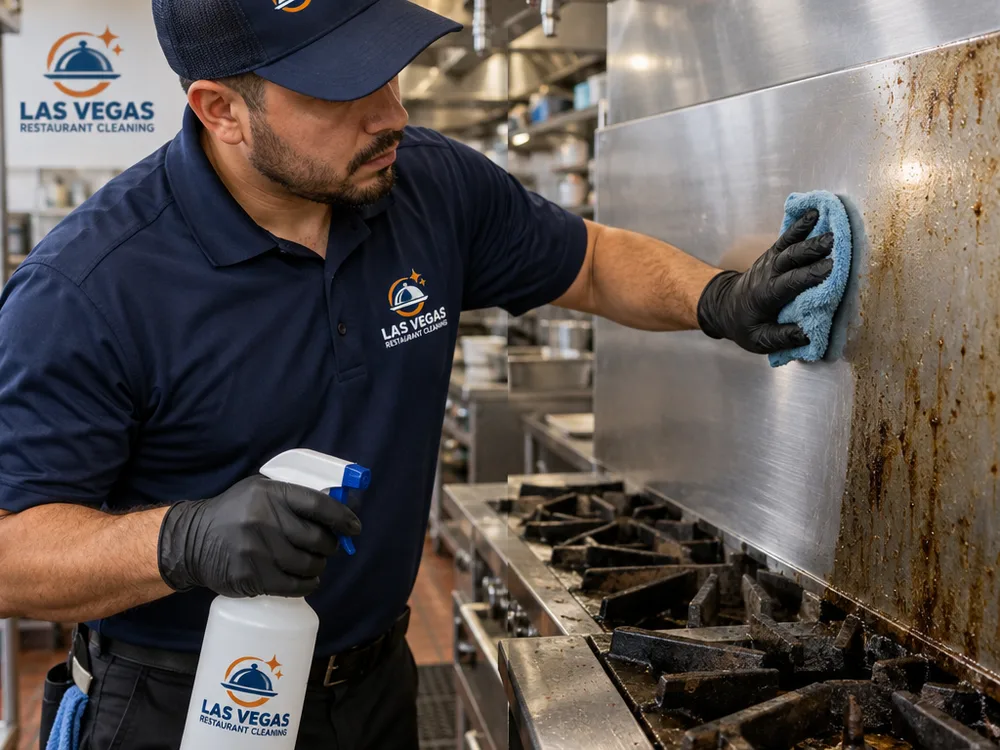
We target baked-on grease, carbon, and food soils with surface-appropriate chemistry and agitation, then wipe down and rinse to a clean, non-tacky finish.
Equipment cleaning is incomplete if the grease falls to the floor and stays there. We clean the surrounding zone so the line feels reset when your team returns.
We review what was cleaned, note any areas that need a deeper future detail due to buildup, and recommend a maintenance frequency that fits your volume and menu.
Restaurant equipment cleaning in Las Vegas typically ranges from about $250 to $900+ per visit, depending on the number of pieces, grease load, and whether it is a targeted cookline detail or a broader equipment reset. Smaller scopes like a single line area or a few units often land on the lower end, while heavy buildup across multiple stations pushes pricing higher.
Final cost is driven by access (tight cooklines take longer), buildup level, required dwell time, and after-hours scheduling. We confirm the exact scope and price after a quick walkthrough so you get a written plan that matches your kitchen.
Client experience
“We needed the line to look inspection-ready without shutting the kitchen down for half a day. They worked around our schedule and the difference on the stainless and around the fry station was obvious.”
“They got the baked-on grease off the flat top sides and cleaned behind the equipment where we never have time to reach. The kitchen smelled cleaner and the floor was not slick anymore.”
Practical answers
Most restaurants do best with a recurring schedule based on grease load and volume, commonly monthly or quarterly for detailed equipment cleaning. Fry-heavy menus, high-volume cooklines, and tight indoor kitchens usually need more frequent visits because grease aerosol settles faster and builds up in hidden areas behind and under equipment.
Yes, equipment cleaning is often scheduled outside service hours so your team keeps the line moving. When you reach out, share your slow windows, close time, and any building access rules so we can plan a visit that fits your operations.
We clean behind and under equipment when it is safe and practical to do so, and we coordinate any movement with you first. Some units are fixed, tied into gas lines, or constrained by fire-suppression and utility connections, so access varies by kitchen layout.
Equipment-only cleaning focuses on the cookline, prep equipment, and the immediate surrounding areas where grease and food soils collect. A broader Restaurant Cleaning Spring Valley scope can also include walls, floors beyond the line, storage areas, restrooms, and front-of-house details, depending on what you need that visit.
It often helps when smoke or odors are coming from grease and carbon buildup on hot surfaces or from old residue around drip and splash zones. If the issue is mechanical (like a failing fan motor or a ventilation system problem), cleaning can still be part of the fix, but it may not be the only step.
We typically need a clear equipment list (or quick photos), your preferred service window, and notes about any areas that are off-limits or require manager access. If your kitchen has specific requirements for chemicals or sanitation documentation, tell us up front so we can match your standards.
Plan your equipment cleaning
Tell us what equipment you want cleaned and when your best service window is. We will recommend a practical scope and frequency so your cookline stays safer, cleaner, and easier to run.